
A wildlife-friendly garden begins by looking beyond individual plants. Start with the wider landscape, then create layers and small habitats that bring more life into your garden.

From the Garden:
This month, I've been thinking a lot about edges. Not edging in the physical sense, but the places where one part of the garden becomes another or where it meets the surrounding landscape.
Edges are places where two different landscapes meet and, ideally, flow beautifully from one to another. These edges aren’t valuable only visually; they're also a good opportunity to support biodiversity. Did you know that woodland edges, for example, are among the richest habitats?
A while ago, a reader asked a question in Viherpiha (Finland's largest gardening magazine) about ’How to Create a Wildlife-Friendly Garden Around a Cabin in the Woods?’.
In my answer, before sharing any plant combinations or features like insect hotels, rocks in sunny spots, water features, or decaying logs, I suggested planting in layers.
The Design Note:
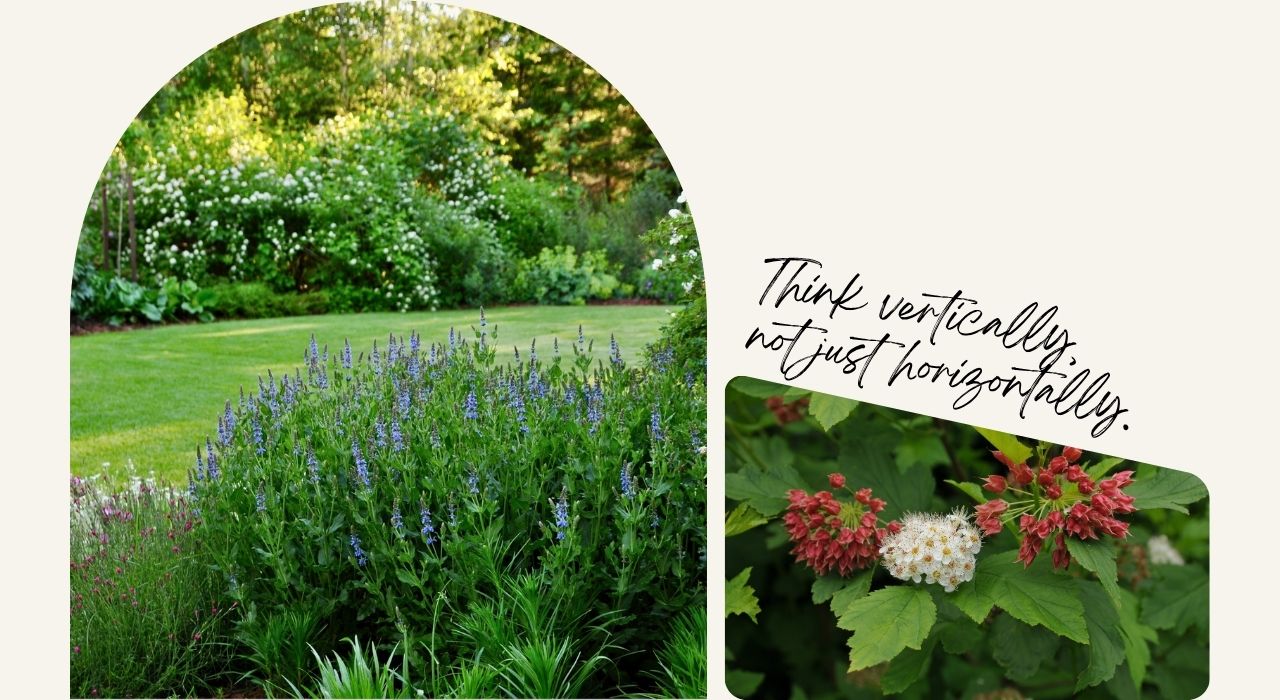
Think in Layers and Microhabitats to Support Wildlife
Suppose you want to invite more wildlife to your garden; plant in layers. This creates a variety of microhabitats for many tiny creatures. Layered planting offers wildlife different means to live, like shelter, food, and nesting places.
When you design layered planting and use coarse surface materials, you can add many more microhabitats in your landscape than in a yard with a lawn, paved surface, and a traditional flower bed.
Think vertically, instead of horizontally
Don’t think about your planting areas only in terms of their footprint on a horizontal level. Think vertically, too, as every planting layer creates new opportunities for habitat above the ground. Also, at ground level, use a variety of coarse-textured materials to create small gaps, crevices, and sheltered spaces for insects and other organisms.
When you plant in layers, you can think of the planting as a block of flats that offers accommodation from the cellar to the penthouse. The more layers you can add to your planting area, the more microhabitats it offers for wildlife.
So consider planting small or medium-sized trees, several shrubs, perennials, groundcovers, and bulbs in combination in the same garden bed.
Of course, you have to consider the scale of the plants and other features, but the same guidelines work in small gardens too. Just remember to choose plants in appropriate scale.
For example, in this tiny backyard below left, we planted an umbrella-shaped, weeping tree, some small shrubs, groundcovers, and spring-flowering bulbs. We also added a decaying log for wildlife, creating a miniature deadwood log garden. Even this layered, small planting area adds many habitats for wildlife.
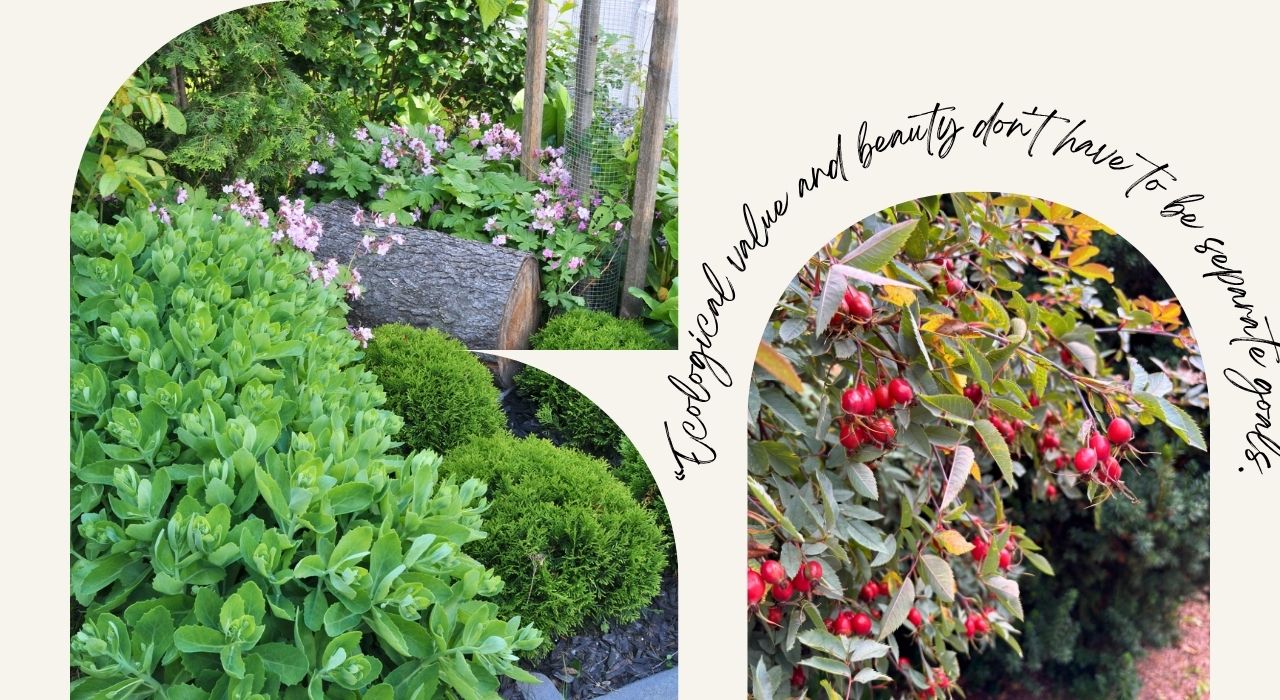
Plants for Wildlife and Seasonal Interest
When choosing plants for each layer, I also consider whether they provide a food source through nectar, pollen, seeds, or berries. This makes them great not only for wildlife but also for the garden owner to enjoy the changing seasons, from early flowers to ripe berries and seedheads in early winter.
When planting in layers, even a small garden can support a surprising amount of wildlife.
Layered planting areas with
- leaf litter,
- deadwood,
- dense shrubs,
- flowering plants,
- sunny openings, and
- shady pockets
all provide different conditions for different organisms.
Habitat diversity doesn't necessarily require more space; it requires more variety in the structure and conditions it offers.

A Small Practice
Whether you have a small garden or a large one, step outside and stand by your planting area.
- Don’t look at your plants just yet. Instead, look beyond your property line, clipped hedge, or wall. What does the surrounding landscape look like?
Then look back at your own garden. - Could you bring some of that landscape into your planting? Are there native plants or suitable cultivars of native plants that could find a place in your garden?
- And then look beyond individual plants. Could you add more layers of vegetation, leave some leaf litter, incorporate a log or other deadwood, or add mulch at ground level?
Even a small garden can support wildlife when we create a variety of layers and microhabitats within it.
If You’d Like to Go Further
If your garden meets a woodland edge and you’re wondering how to turn that sometimes difficult edge into a beautiful, layered planting, The Woodland Edge Garden Kit can help you take the next step.
In the self-study edition, I’ll guide you through designing your own woodland-edge planting and show you how to use my 1:1:1 Plant Trio system to create a beautiful, layered planting that works with its surroundings while supporting wildlife.
Explore The Woodland Edge Garden Kit - $97
Over to You:
When you look at your garden bed, or where your garden meets its surroundings, what would you most like to improve? What could you do to provide more microhabitats?
Leave a comment below. I’d love to hear your thoughts, and your questions may inspire something I explore in a future Blueprint.
Ecological value and beauty don't have to be separate goals.
I’ll be back next month with another Garden Blueprint.
Until then, happy designing and gardening!

Your Garden Design Mentor


P.S. If this Garden Blueprint made you think of a gardening friend, I’d love for you to share it with them.
And if you're reading online and haven't subscribed yet, join The Garden Blueprint to receive the next one in your inbox.


Responses