
Sloped Front Yard Landscaping Ideas: A Real Garden Design Example
Question from Leigh
How should I plant and/or fence these steep, rocky slopes so they look good and no one gets injured falling down them? Thanks!
We moved in this year, and the landscaping feels like a blank slate. I don’t know where to start! All we have tried is to get better grass to grow on these slopes, which has proved difficult.
New Jersey, USA
Understanding the Situation
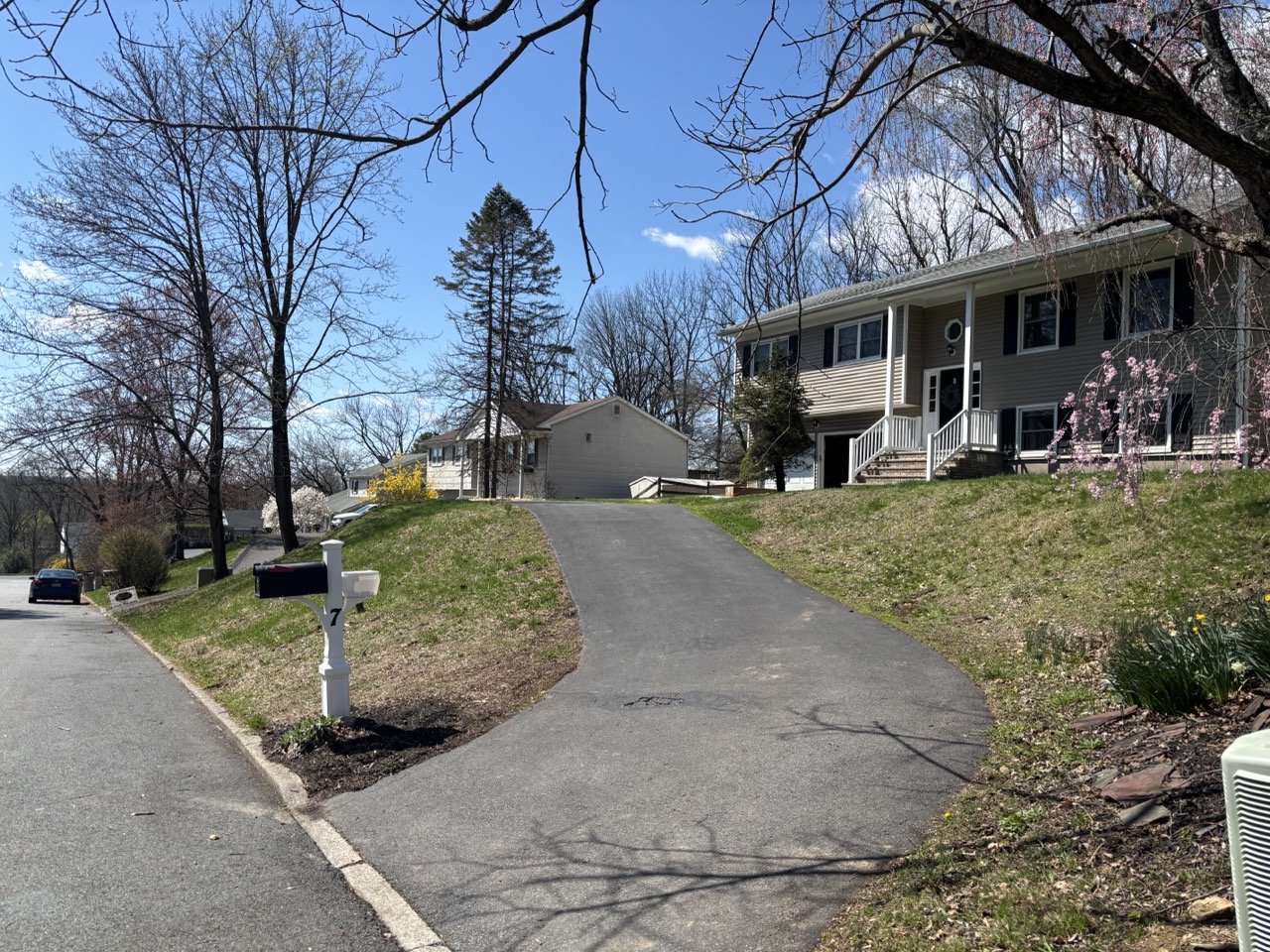
Leigh’s front yard has a steep slope. The driveway divides the slope into two parts. The upper slope appears slightly steeper than the one between the driveway and the street.
Both are currently covered with lawn. From this photograph, it’s hard to tell how much soil there is beneath the surface, especially since the slopes are rocky. That is something worth checking before choosing plants and deciding their final placement, particularly since larger shrubs and conifers need sufficient soil depth. Perennial groundcovers are more forgiving.
The Challenges of a Steep Lawn
There are a few challenges when trying to maintain a lawn on a steep slope.
Rainwater tends to run downhill before it has time to soak into the soil. This can leave the slope surprisingly dry, while heavy rain may cause surface erosion and wash away soil and seeds.
Mowing is another concern. Keeping grass looking good on a steep slope can be difficult, and mowing may sometimes be dangerous.
For these reasons, I would consider gradually replacing the lawn with planting that is better suited to the conditions.
Where I Would Start
Before deciding what to plant, I would look at how the spaces around the slopes are used.
The upper slope is beside the area in front of the house, near the main entrance. I imagine this space is used for coming and going, perhaps spending time outdoors, or simply standing and chatting with someone.
Because people may spend time here without paying much attention to the steep edge, I would give this area the most attention when it comes to safety.
The lower slope on the left side of this photo, beside the driveway, serves a slightly different purpose. The driveway is mainly a place for moving through, either by car or on foot. People are less likely to linger here in the same way.
Because these two areas serve different purposes, I would approach their design slightly differently.
One thing to notice: Before making any decisions about fences or other permanent structures, it's also important to check local regulations and any safety requirements that may apply.
Phase 1: Create Structure and Define the Edges
I would begin with the upper slope, beside the paved area in front of the house.
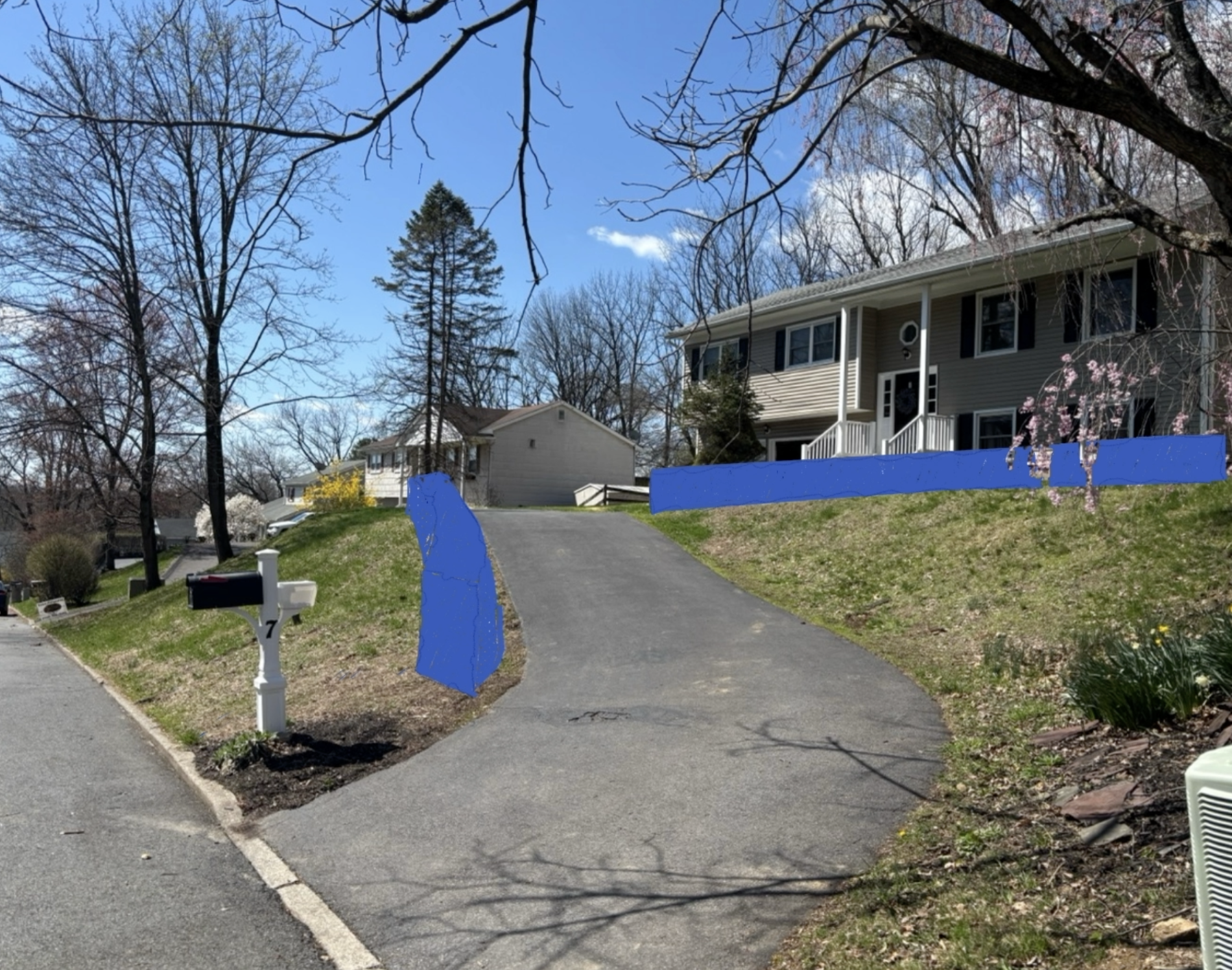
Here, I would consider planting a neatly clipped hedge along the top of the slope.
It would frame the house beautifully and create a clear visual boundary along the paved area, separating it from the steep slope.
Similarly, I would plant a clipped hedge along the left-hand side of the driveway in this photograph.
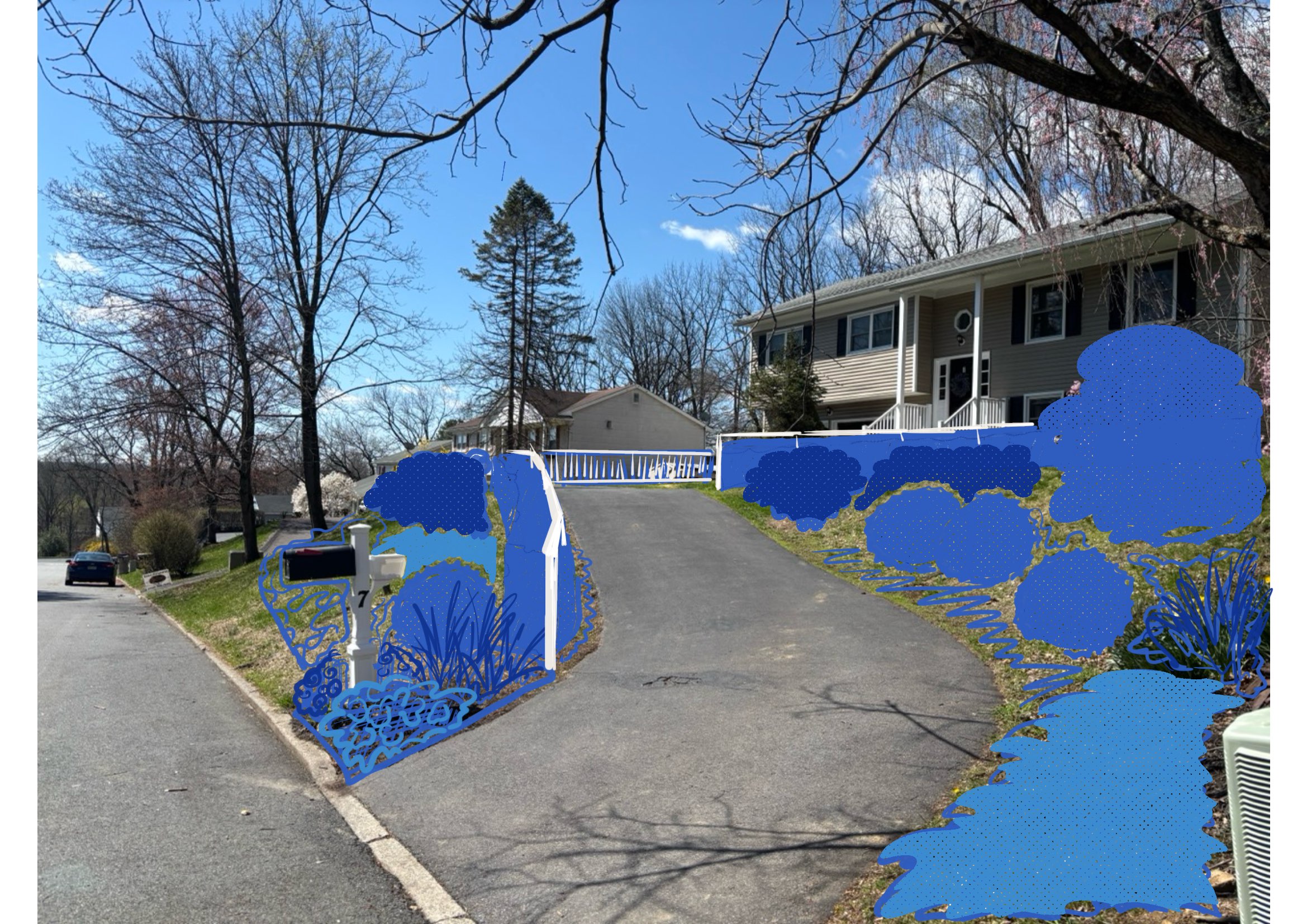
However, since preventing falls is one of Leigh's main concerns and hedges take time to grow, I would also install a proper protective handrail-style fence alongside them. (You'll see the combination in place in the last sketch on this page.) On steep slopes, a hedge alone should not be relied upon as a safety barrier. I think this combination of clipped hedge and a white-painted rail looks lighter and more welcoming than traditional fencing.
If you look closely at the photograph, you can see there seems to be a slope between Leigh’s yard and the neighbor’s, too. If space permits and the fall isn’t too high, you could add a hedge with a rail, or, if the slope is very steep, install a fence that matches the rails in the front yard.
The hedges don’t need to be particularly tall. Around 2½ to 3 feet (80-90 cm) would be enough to fill the space under the railing and give the garden structure without making it feel enclosed.
I would start by planting these hedges and adding the rail-style fencing. Remove a strip of lawn where the hedges will be planted, prepare the soil with suitable growing medium, and edge the planting areas neatly against the remaining lawn. Add a layer of mulch after planting to protect the soil and retain moisture.
For the clipped hedges, I would choose plants that are hardy in your area and suited to the soil type and light conditions. The larger trees already framing the house are beautiful, but they may also affect how much sunlight reaches different parts of the garden.
This would be my first phase: creating structure while addressing the most important safety concerns.
Phase 2: Replace More Lawn with Planting
Once the hedges and any necessary protective railings are in place, I would turn my attention to the slopes themselves.
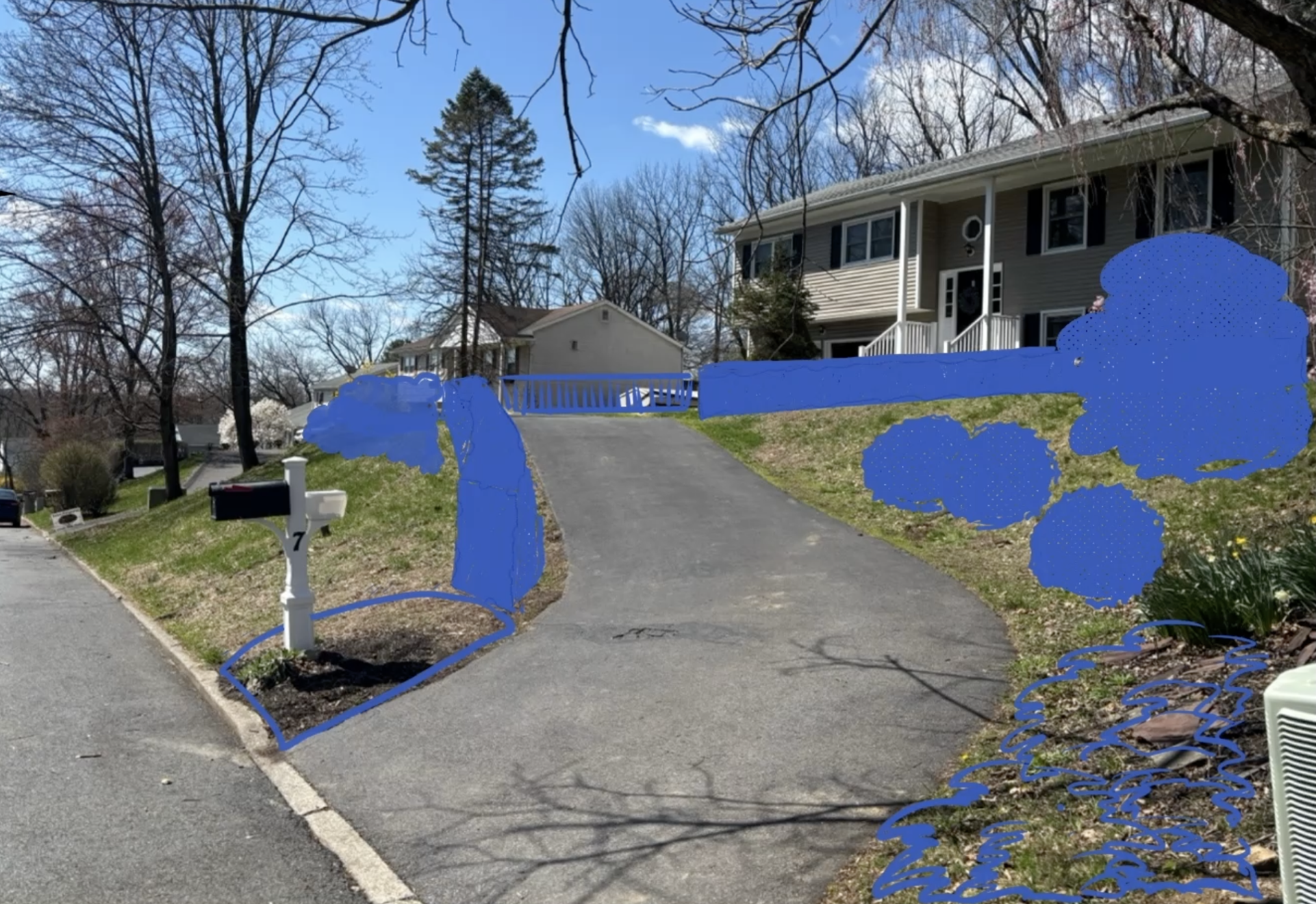
Rather than trying to maintain lawn on these difficult areas, I would introduce a combination of low-growing shrubs, ground-covering perennials, small flowering shrubs, and perhaps a few evergreens.
Spring and early-summer bulbs, such as tulips and alliums, growing through ground-covering plants could add extra seasonal interest.
The aim would be to create a generous, continuous cover of vegetation that helps protect the soil, reduces maintenance, and makes the slopes feel like an intentional part of the garden.
A few carefully positioned conifers could help guide the eye through the planting and give structure throughout the year, while smaller flowering shrubs would soften the space and add some layers and flowers.
I also added low ground-covering shrubs on both sides of the driveway. The other area is at the foot of the slope right beside the beginning of the driveway, and the other is more in the middle of the lower slope on the other side. They would look wonderful when having tulips or alliums growing through them.
There is also space for one larger flowering shrub on top of the slope on the right-hand side of the front yard.
Beneath the mailbox, I could imagine a combination of flowering perennials and spring bulbs. Long-flowering annuals would also work if you enjoy changing the planting from year to year.
I would plant the rest of the still-empty space with easy-maintenance, ground-covering perennials. Along the driveway, I would use very low-growing plants to keep the edges open and have some space between the railing and the driveway. In other areas, the perennials could be slightly taller, around ½ to 1½ feet, and they would weave a nice tapestry of different leaf textures and flowers. The larger perennial areas also provide space to pile snow if needed during the winter.
As always, the final plant choices and their placement would depend on the growing conditions, particularly soil depth, drainage, and available sunlight.
If the property boundaries and local regulations allow it, you could extend the planting towards the curb rather than leaving a narrow strip of difficult-to-maintain lawn.
Before doing that, it's important to check the property survey and local requirements. Part of the roadside area may fall within a public right-of-way, where planting can be restricted.
And, of course, I would keep the planting low enough near the street to maintain a clear view in both directions when leaving the driveway.
Bringing It Together
For me, the key to this front yard is not trying to solve everything at once.
I would begin by making the areas safer and creating a clear structure with hedges. Then I would gradually replace the difficult lawn with planting that is better suited to the slopes.
This way, the garden can develop in manageable stages, with each step making the space both more practical and more beautiful.
___
🌿 Do You Have a Garden Design Question?
Is there a part of your garden you're not quite sure what to do with?
I'd love to hear about it. You can send me a photo of your garden along with your question, and I may choose it for a future Ask Sari feature, where I'll share my thoughts and design suggestions.
Share Your Garden Question:
https://www.gardendesignstories.com/ask-sari
___
🌿 THE GARDEN BLUEPRINT
If you enjoy exploring the thinking behind a garden design, you might enjoy The Garden Blueprint, my letter for thoughtful home gardeners. I share ideas and observations to help you see your own garden with fresh eyes and feel more confident about your next steps.
Join me here:
https://www.gardendesignstories.com/newsletters/the-garden-blueprint
Want to Discover Your Garden Style?
Take my popular Garden Style Quiz to find out which outdoor aesthetic suits you best—and get tailored ideas for building a garden you love.
