
From the Garden:
Listening Before the Season Begins
Right now, many of our gardens are still resting under snow.
The ground is frozen, the beds are quiet, and for most of us, even seed sowing feels a little too early. And honestly? That’s perfectly fine. This part of the season isn’t about doing — it’s about orientation.
Over the years, I’ve noticed something important: the gardens that feel easiest and most satisfying to care for are almost always the ones where the design works with the site — not against it. When plants are chosen to suit the existing light, soil texture, and other conditions, everything else begins to fall into place.
This quiet season is actually a gift. With no pressure to act, we can begin the new garden year with clarity instead of guesswork.
The Design Note:
Everything starts with your site
One of the biggest shifts I see in confident gardeners is this:
They stop asking, “What do I want to plant here?”
And start asking, “What does this place need?”
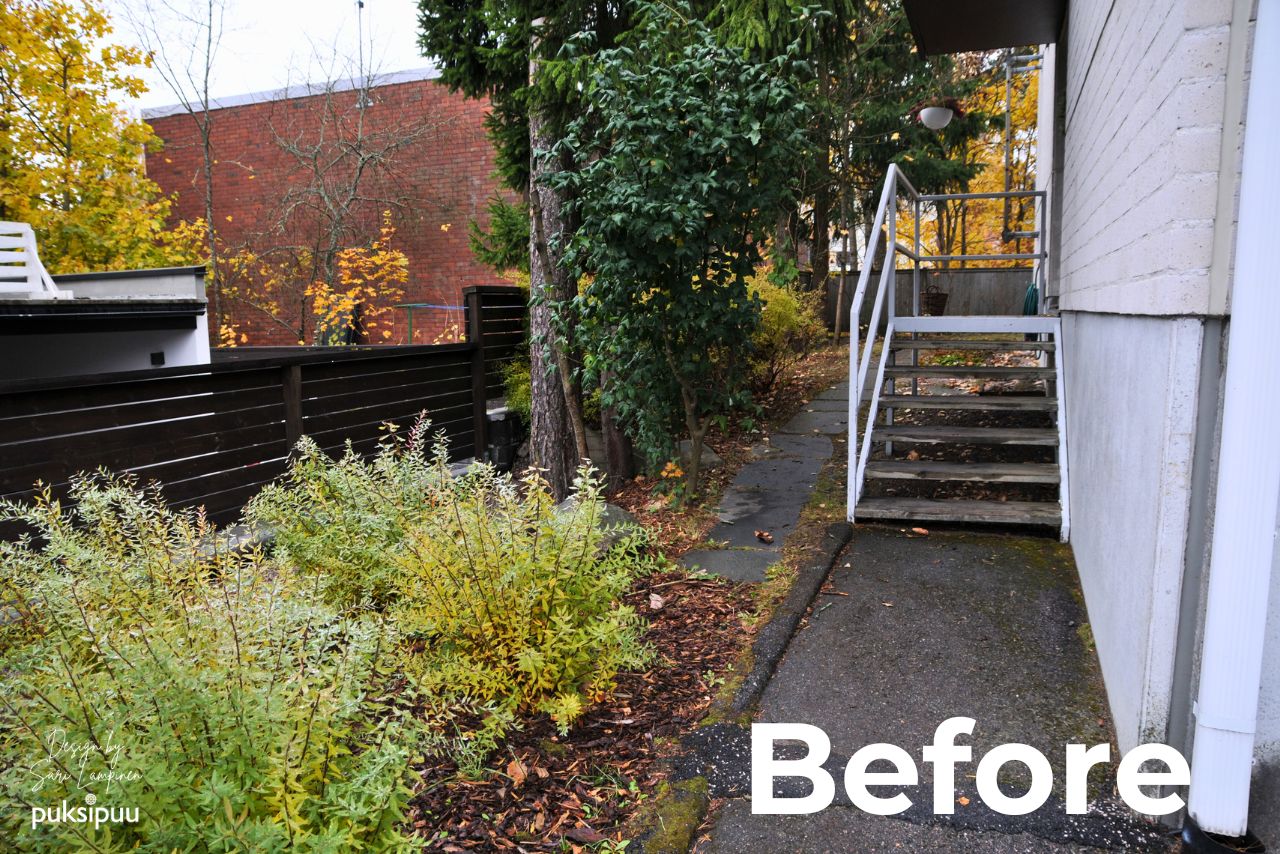
This side yard is a good example of why that matters.
When I first looked at this space, it wasn’t inviting. It felt narrow, shaded, and a little forgotten — the kind of area many gardeners struggle with. But instead of trying to turn it into something it wasn’t, I began working with what was already there: limited space, surrounding structures, and a sunny aspect (with overgrown trees).
By felling the too-large-grown trees, adding privacy, and choosing plants that genuinely thrive in those conditions, the atmosphere changed completely. It became balanced, resilient, and welcoming. It was allowed to be what it was meant to be: a sunny entrance and a passage to the backyard.
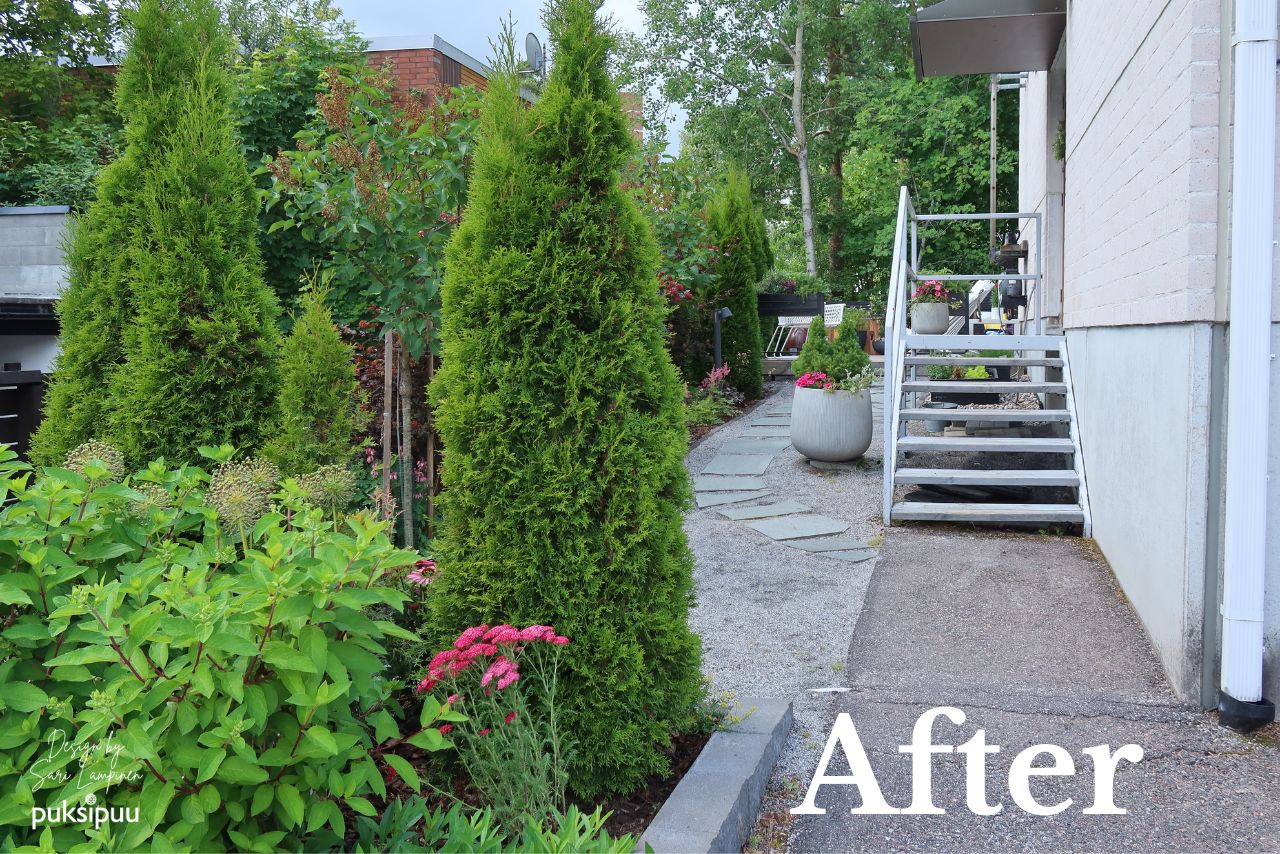
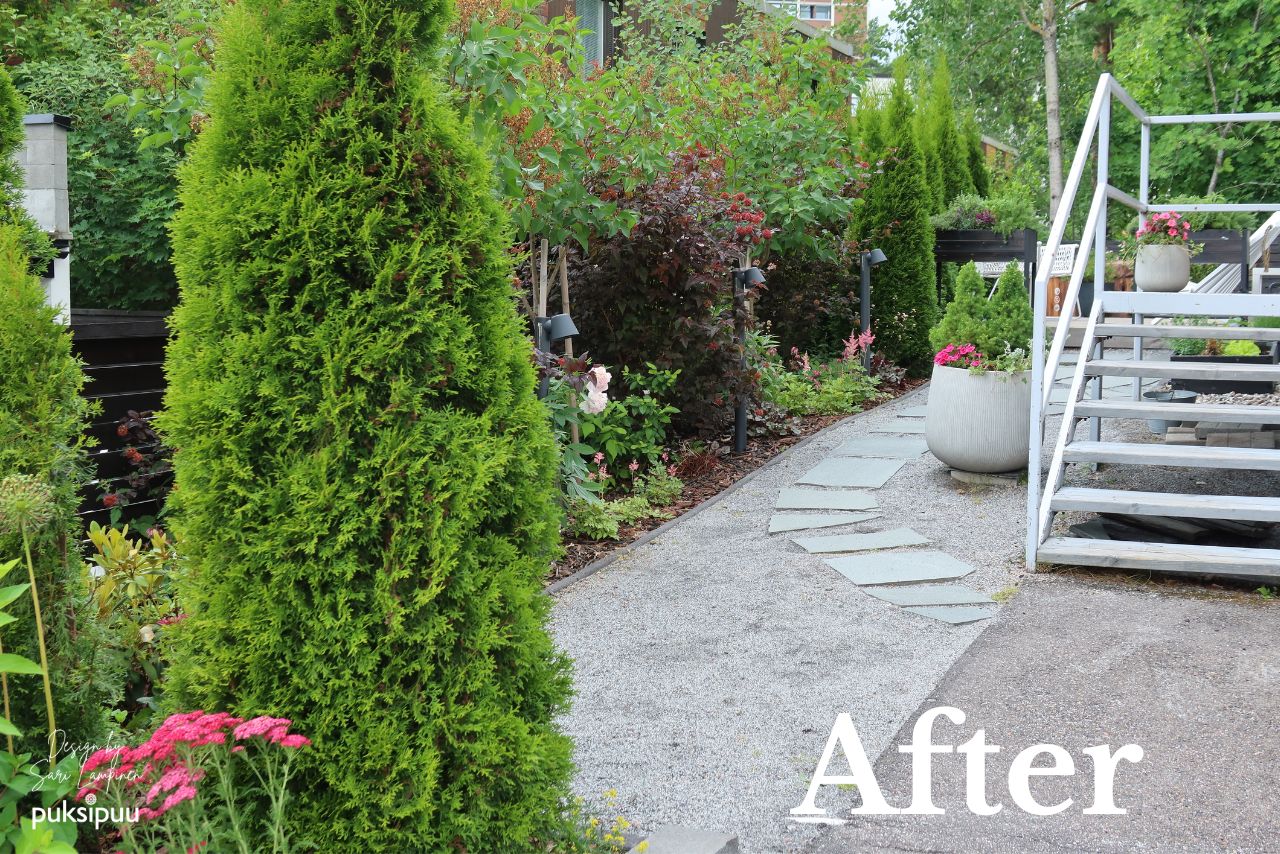
What I love about transformations like this isn’t just the “after” image. It’s how predictable the result becomes once the site’s characteristics are respected. That’s the moment when the garden starts working with you — season after season.
This isn’t about limiting creativity. It’s about unlocking it.
When you work with your site’s characteristics, you gain confidence. Decisions feel lighter. And the garden starts supporting you, instead of the other way around.
This same approach is the foundation for confident plant choices. And it’s something you can apply to any garden, no matter the size or starting point.
A Small Practice:
Some Small Things to Notice This Month
You don’t need to plan or choose plants yet.
This month, simply observe.
If you look at the side yard images above, notice how the main functions, elements, and structures stayed the same. The transformation didn’t come from adding more — it came from choosing better.
Look at your garden — or even just photos of it — and notice:
- What is the purpose of this space?
- Is it sunny or shady?
- Pay attention to the mood: do you like to spend time in there?
You’re not solving anything yet. You’re learning the language of your site.
And that’s the foundation of confident plant choices later on.
If You’d Like Support Here
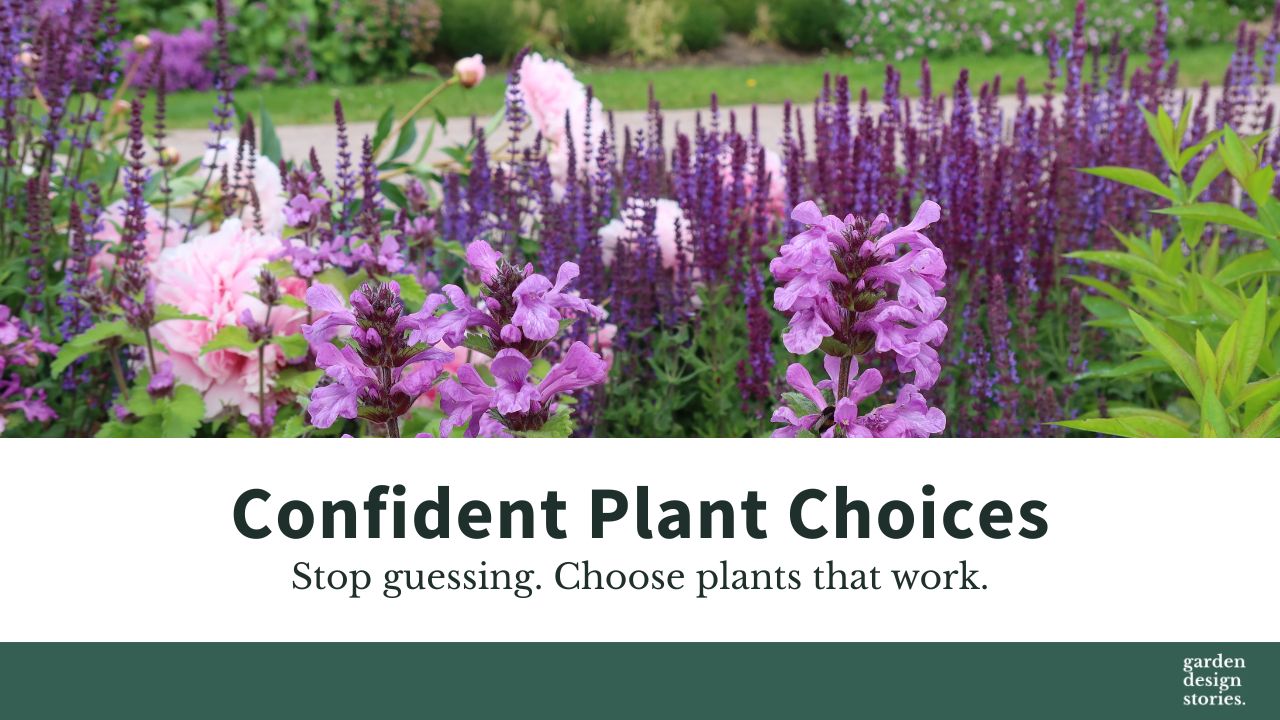
If you’re ready to move from noticing to understanding, I’ve created a workbook supported with videos called Confident Plant Choices.
It’s designed to help you identify your garden’s key growing conditions like hardiness zone, light, soil, moisture, and micro-conditions in a fast and easy way, so you can choose plants that truly thrive where you live.
This isn’t about plant trends or copying someone else’s garden. It’s about learning to read your site’s conditions and making decisions with clarity and confidence.
If that feels helpful right now, you can explore it here:
A Question for You:
I’d love to hear from you.
When you think about your garden right now:
- Which area feels the easiest and most ”natural”?
- And which area feels like it’s been waiting for a different approach? Do you have any idea why?
You can answer below — I read every comment.
Warmly from the garden,



Responses