Why Your Woodland Edge Looks So Abrupt And What’s Missing
Every garden has boundaries.
Those boundaries define your property, and as a garden designer, I have to respect them. But the landscape itself doesn’t stop at the property line.
Beyond your garden might be a neighbor’s garden, a meadow, wild nature, or mature woodland. Property lines are human-made. The landscape doesn’t know they’re there.
And that raises an interesting garden design question:
How does your garden connect with the landscape beyond it?
When two landscapes meet
Imagine an open, cultivated garden with a lawn. Right beyond it is a mature woodland with tall trees.
Both can be beautiful on their own.
But when they meet suddenly, they can read as two separate landscapes. The woodland may almost feel like a wall at the edge of the garden.
When I see this in a garden, I don’t immediately ask:
What should we plant here?
I first step back and look at the bigger picture.
How could these two landscapes connect more naturally?
It may be a transition that’s missing
Sometimes the problem isn’t that the garden needs more plants.
What’s missing is a sense of transition between the cultivated garden and the natural landscape beyond it.
When that transition feels more considered, the garden can begin to feel calmer and more connected—as though it belongs to the larger landscape around it.
This is a design question before it becomes a plant question.
See a real woodland-edge transformation
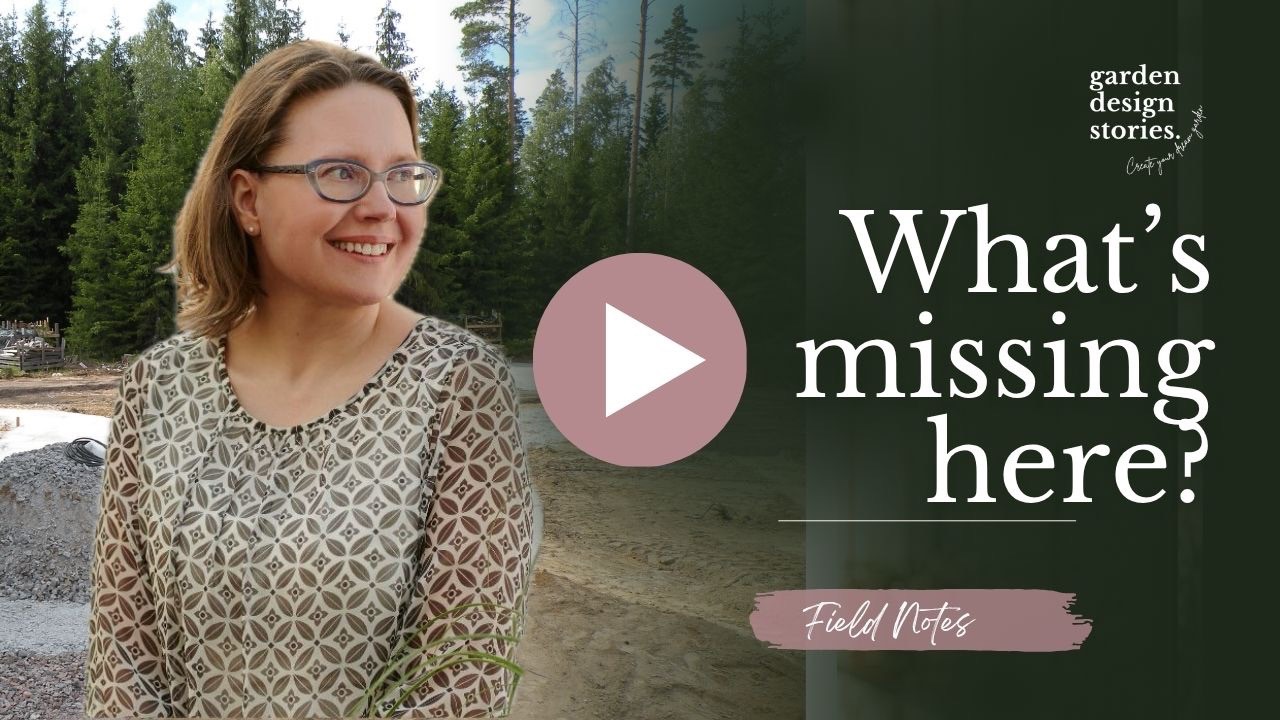
In this video, I’ll show you one of my own garden design projects, including where we started and how the woodland edge looked a few years after planting.
As you watch, pay attention not only to the individual plants, but to what happens visually where the open garden meets the woodland.
Look at the edge of your own garden
Now take a step back in your own garden.
If you have woodland, mature trees, or a more natural landscape beyond your cultivated garden, look at the place where the two meet.
Does the transition feel natural?
Or can you clearly see one landscape stopping and another one beginning?
Don’t worry about choosing plants yet.
For now, simply notice the boundary.
Learning to see what is happening in the landscape is often the first step toward making better garden design decisions.
Ready to Design Your Own Woodland Edge?
If the edge between your garden and woodland feels abrupt, the next step is figuring out how to create a transition that works with your own site.
The Woodland Edge Garden Kit guides you step by step through the design decisions — from understanding your site and deciding where the transition should go to creating a planting area that connects your garden more naturally with the woodland beyond it.
Explore The Woodland Edge Garden Kit →

Want to Discover Your Garden Style?
Take my popular Garden Style Quiz to find out which outdoor aesthetic suits you best—and get tailored ideas for building a garden you love.
