
3 Reasons to Plant Sedum Autumn Joy
In the garden, there are - or at least there should be - a group of plants that give a permanent backbone for all the other planting in your garden. You might already have planted your evergreens and other structural plants like conifers, evergreen shrubs, and trees, etc. Did you know that you need those similar plants on a smaller scale, too? That’s when plants like Sedum Autumn Joy step into the play.
You need ´staying power,´ and so does your flowerbed
Sedum Autumn Joy is not an evergreen, but it does have a lot of ´staying power´. It’s one of those plants that really earn their place in the garden. And Autumn Joy is certainly one of them. It has been around forever for a good reason. If it does not ring a bell, you might know it better as the name stonecrop or Sedum ´Herbstfreude´. Yes - it’s the same plant.
Why to plant Sedum Autumn Joy:
1. Peak performance
You are charmed by the fresh green rosettes that burst from the ground in spring. The clump-forming habit has a strong architectural presence that develops early in the season and keeps its´ posture until late autumn.
Little by little, flowers turn from fresh green into lovely rose colour. In the autumn, Autumn Joy slowly turns to a delicious chocolate brown, still keeping its form long into the colds of winter. I think that Autumn Joy is always having its´ peak performing moment.
2. Skeletal plant
You need these stable plants to support other plants in their roles in the planting area. With its prominent foliage and late-summer flowers, Autumn Joy really earns its place as a backbone-forming plant. Their role is to keep the show going through all seasons.
In addition, it is trustworthy and drought-tolerant. It enjoys full sun and happily shares its place in the sun with others.
And like famous plantswoman Beth Chatto says,” too many star performers lumped together can become quarrelsome”.
3. Nectar for bees and butterflies
We can do our share to support wildlife and call butterflies to feast in our garden. Stonecrops are valuable in that sense, too. They provide food for nectar-feeding insects, such as butterflies and bees, until the first snow.
There are no toxic effects reported to people, animals, or birds.

So I really think that Sedum Autumn Joy earns its place in your garden. As it does in mine and also in my design clients´ gardens.
Any need for supporting actors? And the Oscar goes to ...
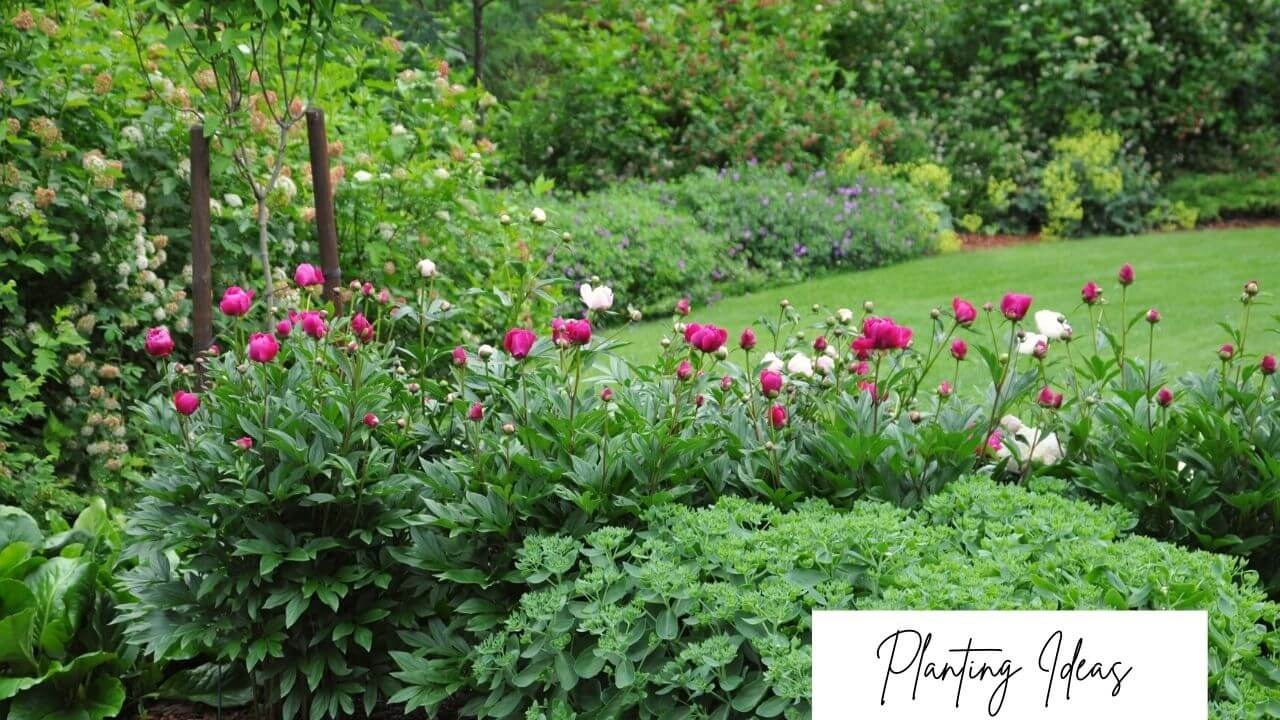
Like in this garden whose owners happened to love paeonies. Paeonies are those lovely star performers who need trustworthy supporting actors to keep going all summer. And surprisingly, they are not at all a boring combination!
For this planting, I combined pink and scarlet paeonies, sedum Autumn Joy, and bergenias , backed up by a little crafted flowering tree. Sprinkled with early spring flowering bulbs underneath. They all look so nice together!

PLANT FACTS:
Actually, even though we are so used to calling Autumn Joy a sedum, it’s time to start learning a new name for it. At least I do.
The official botanical name for Autumn Joy is Hylotelephium ´Herbstfreude´. What a name! Lovely Autumn Joy is actually only its commercial name.
You can call the plant whatever you like to enjoy it in your garden. However, botanical names help you to choose the right plant at the garden centre. And that's something that we love, don't we?
Want to Discover Your Garden Style?
Take my popular Garden Style Quiz to find out which outdoor aesthetic suits you best—and get tailored ideas for building a garden you love.
